Einstein Researchers Discover Why “Zombie Cells” Accumulate With Age
BRONX, N.Y., Oct. 5, 2026
Press Release Disclaimer: This is a press release distributed through the XPR Media network. It has not been independently verified by our newsroom.
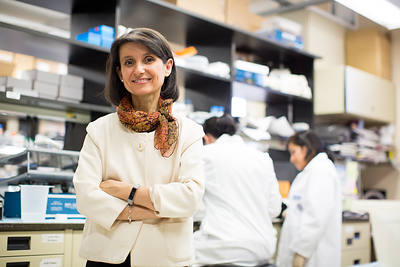

Einstein Researchers Discover Why “Zombie Cells” Accumulate With Age
PR Newswire
BRONX, N.Y., Oct. 5, 2026
Nature Aging findings point to a key role for chaperone-mediated autophagy and suggest ways to clear cells that damage the immune system
BRONX, N.Y., Oct. 5, 2026 /PRNewswire/ — As we grow older, our bodies accumulate “zombie cells”—living cells that have stopped dividing or functioning normally—but linger in our tissues, contributing to chronic inflammation and age-related diseases. A new study led by Albert Einstein College of Medicine researchers and published today in Nature Aging helps explain why these cells, formally known as senescent cells, become increasingly difficult to eliminate. The research also points to a potential strategy for helping the body rid itself of these cells.
In experiments with mice, the researchers found that declining activity in a cellular recycling process called chaperone-mediated autophagy (CMA) impairs both zombie cells and the immune cells responsible for removing them. Restoring this recycling process reduced senescent-cell buildup and lessened the severity of lung fibrosis, a disease tightly connected to senescence.
“In older animals, age-related changes in both senescent cells and the immune cells responsible for removing them allow these zombie cells to accumulate and play a role in disease,” said study leader Ana Maria Cuervo, M.D., Ph.D., distinguished professor of developmental & molecular biology and of medicine, the Robert and Renee Belfer Chair for the Study of Neurodegenerative Diseases, and co-director of the Institute for Geroscience at Einstein. “By restoring cellular recycling, we may be able to help the body’s own defenses clear these cells more effectively.”
When Cellular Recycling Falters
Dr. Cuervo is one of the world’s leading authorities on CMA, a process that enables the body’s cells to remove and recycle damaged or unnecessary proteins. CMA involves specialized “chaperone” molecules that selectively target unwanted proteins for digestion.
In earlier research, Dr. Cuervo discovered that CMA activity declines with age. More recently, she and her colleagues have shown that reduced CMA activity allows cellular “garbage” to accumulate in neurons and other cells. This buildup contributes to Alzheimer’s and other neurodegenerative diseases as well as vascular and metabolic conditions such as atherosclerosis and diabetes.
In the new study, Dr. Cuervo and her team investigated whether declining CMA contributes to the accumulation of senescent cells that can disrupt healthy tissue function as we age. Most of the study’s experiments were conducted in mice, while analyses of human lung tissue provided evidence that the findings may also be relevant to people.
Revealing CMA’s Wound-Healing Role
Zombie cells can sometimes be useful. During wound healing, for example, some injured cells enter a senescent state in which they release substances that recruit other cells to help with tissue repair. Normally, these zombie cells are soon cleared away by macrophages, essential immune cells that fight infection, clear dead cells and regulate inflammation and tissue repair.
To investigate CMA’s role in wound healing, the researchers used mice whose macrophages had been genetically altered to lack CMA. Compared with control mice, these mice accumulated more zombie cells at wound sites and their wounds healed more slowly. The findings indicate that CMA in macrophages is important for clearing senescent cells that can interfere with tissue repair.
Zeroing in on “Zombification”
Scientists can create zombie cells in the laboratory by exposing body cells to drugs that stop them from dividing. When researchers “zombified” fibroblasts—cells found in connective tissue—from young and old mice, they found striking differences in CMA activity.
Cells from young mice increased their CMA activity as they became senescent. By contrast, cells from old mice failed to increase their already low CMA activity. This failure had major consequences: Certain proteins inside the senescent cells were not properly broken down through CMA. As a result, these cells secreted undigested toxic substances that made nearby healthy cells more likely to turn into zombies and interfered with macrophages’ ability to recognize and remove them. Additionally, the researchers found that CMA activity in older animals’ macrophages was lower than that in younger animals, reducing their ability to engulf and eliminate senescent cells.
Needed: A New Strategy for Senescent Cells
Ever since scientists discovered that zombie cells help drive the aging process, researchers have been developing so-called senolytic drugs to eliminate them. However, the new findings suggest that testing these drugs in cells taken from young animals and made senescent in the laboratory may not fully capture how they will work in older bodies. The results point to another approach: using a compound that both activates CMA to reduce the harmful effects of zombie-cell secretions and restores macrophages’ ability to recognize and engulf zombie cells.
The researchers had previously developed such a compound: a small-molecule CMA activator called CA77.1. Experiments involving aged mice showed that five months of daily oral treatment with CA77.1 reduced the buildup of zombie cells in several organs and reduced signs of inflammation and fibrosis. In a separate experiment, treating macrophages isolated from aged mice with CA77.1 restored their ability to engulf particles to levels comparable to those of macrophages from young mice.
Potential for Helping People
The next step was determining whether their findings could be relevant to a human disease associated with aging. A logical candidate was idiopathic pulmonary fibrosis (IPF), in which scar tissue progressively builds up in the lungs, making it increasingly difficult to breathe. People with IPF have a median survival of only three to five years after diagnosis.
When the researchers examined lung samples of patients with IPF, they found markedly reduced CMA activity, raising the possibility that a CMA-boosting drug might help against lung fibrosis. They tested CA77.1 in a mouse model of the disease and obtained promising results: Treatment begun early after lung injury reduced the severity of lung fibrosis as well as signs of cellular senescence and inflammation.
“Our research connects two major drivers of aging—declining CMA and cellular senescence—and shows for the first time how their interaction allows senescent cells to evade clearance by the immune system in old organisms,” said Dr. Cuervo. “We’ve also found that instead of trying to kill zombie cells, we may be able to restore their interaction with the immune system so that the body can clear them naturally. The next challenge is determining whether this approach can eventually be developed into a safe treatment for age-related diseases in people.“
The paper, “Decline of chaperone-mediated autophagy in aging impairs macrophage clearance of senescent cells” (DOI: 10.1038/s43587-026-01240-w) was supported by the NIH National Institute on Aging, the Hevolution Foundation, the Freedom Together Foundation and the Rainwaters Foundation. First author Rebecca Sereda conducted the research as a graduate student in Dr. Cuervo’s laboratory at Einstein co-mentored by Dr. Susmita Kaushik, and involved researchers from two additional Einstein laboratories and three external collaborating laboratories. The work grew out of an Einstein Hevolution Partnership Award led by Dr. Cuervo.
Other Einstein study authors were Kristen Lindenau, Antonio Diaz, Zhaohui Liu, Olaya Santiago-Fernández, Rabia R. Khawaja, Ronald Cutler, Mericka McCabe, Felipe Vilicich, Bhakti Chavda, Yair Botbol, Evripidis Gavathiotis, Simone Sidoli, and Susmita Kaushik.
Addition authors were: Jazmin Calyeca, Natalia Del Pilar Vanegas, Hu Chen, Ana L. Mora, and Mauricio Rojas, of Ohio State University; Sylvére Durand, Fanny Aprahamian, and Guido Kroemer, of the Centre de Recherche des Cordeliers and Gustave Roussy; and Toren Finkel, of the University of Pittsburgh.
Albert Einstein College of Medicine has a portfolio of intellectual property related to this research and is seeking licensing partners able to further develop and commercialize this technology. Interested parties can contact the office of biotechnology and business development.
About Albert Einstein College of Medicine
Albert Einstein College of Medicine is one of the nation’s premier academic centers for basic science research, clinical investigation, and biomedical education. Located in the Bronx, Einstein is home to nearly 1,000 M.D., Ph.D., and M.D./Ph.D. students and more than 2,000 full-time faculty members. Einstein receives approximately $200M in funding from the National Institutes of Health (NIH) each year and houses six NIH-funded research centers, in cancer, intellectual and developmental disabilities, clinical and translational research, AIDS, and two in diabetes. In partnership with Montefiore Health System, Einstein advances clinical and translational research to accelerate the pace at which new discoveries become the treatments that benefit patients. For more information, please visit einsteinmed.edu, and follow us on Instagram, LinkedIn, Twitter, Facebook, and view us on YouTube.

 View original content to download multimedia:https://www.prnewswire.com/news-releases/einstein-researchers-discover-why-zombie-cells-accumulate-with-age-302898546.html
SOURCE Albert Einstein College of Medicine