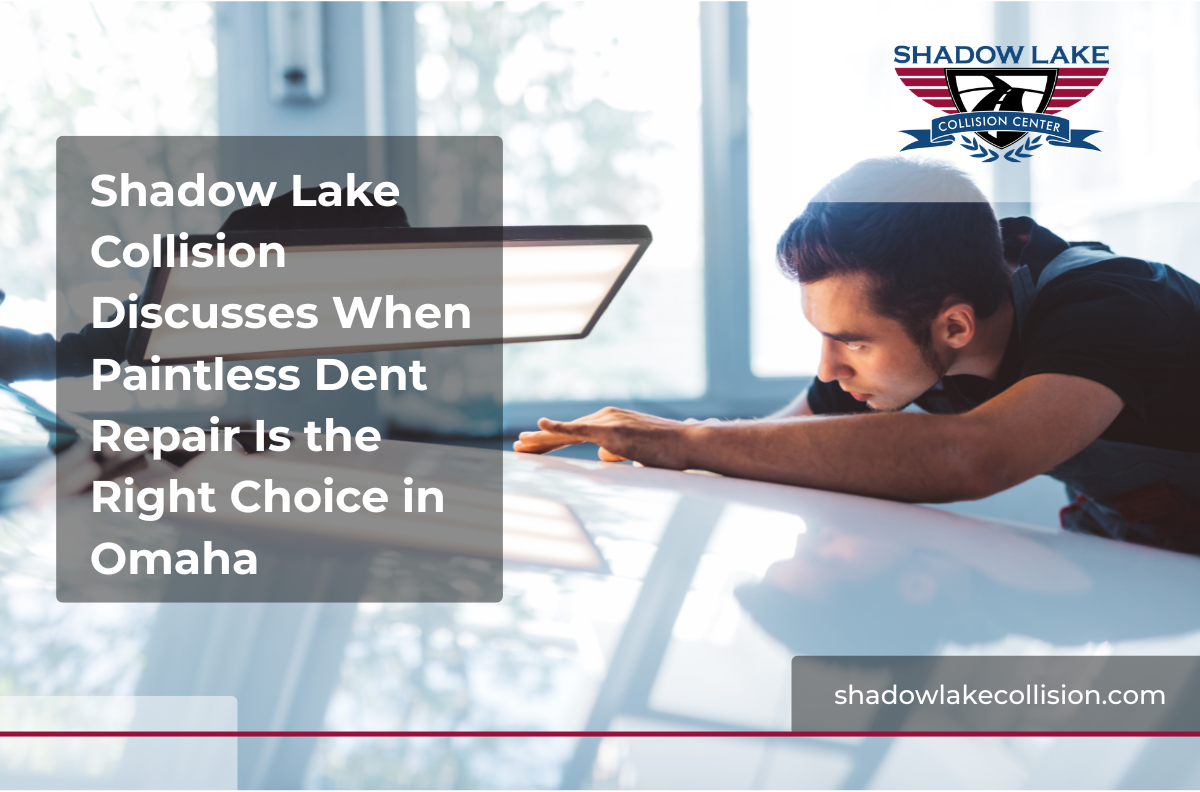
Shadow Lake Collision Discusses When Paintless Dent Repair Is the Right Choice in Omaha
Omaha, NE - August 26, 2026 - PRESSADVANTAGE - Shadow Lake Collision has updated its consumer information about
Press Release Disclaimer: This is a press release distributed through the XPR Media network. It has not been independently verified by our newsroom.

Omaha, NE – August 26, 2026 – PRESSADVANTAGE –
Shadow Lake Collision has updated its consumer information about paintless dent repair with new guidance distinguishing four factors that can influence whether PDR is considered for exterior vehicle damage: paint condition, dent characteristics, panel accessibility, and panel material.
The August 26 update expands the company’s previous PDR information, which described the repair method more generally, by adding a defined framework consumers can use to understand the evaluation process. The new material also explains circumstances in which conventional body repair or refinishing may be considered instead.

Paintless dent repair, commonly known as PDR, is a method used to reshape qualifying dents while retaining the existing painted finish. Because suitability depends on the characteristics of the affected area, the updated Shadow Lake Collision resource focuses on the conditions technicians evaluate rather than categorizing damage solely by its visible size or cause.
Paint condition is one of those considerations. When a dent has not fractured or otherwise compromised the existing finish, a paintless approach may be evaluated. Damage involving the painted surface can introduce refinishing considerations beyond the scope of PDR.
Dent characteristics provide another part of the evaluation. Shape, depth, location, and the way a panel has been affected can influence the repair approach. A broad, shallow dent can present different considerations from sharply creased damage even when the affected areas appear similar in size.
The August update also adds more specific information about panel accessibility. PDR can require access to the affected area using specialized tools and techniques. Vehicle construction and the location of the damage can therefore influence whether appropriate access is available and whether components must be removed as part of the repair process.
Panel material completes the four-factor framework. Vehicle exterior components can incorporate steel, aluminum, and other materials, making identification of the affected component relevant when evaluating an applicable repair procedure.
These factors can be particularly useful for understanding hail damage. A single weather event can produce dents across the hood, roof, deck lid, doors, fenders, or quarter panels, but the same repair procedure does not necessarily apply to every affected area.
Door dings and other localized dents can present similar distinctions. The cause of a dent provides context, while its actual characteristics and the condition of the affected component provide the information used to determine an appropriate repair approach.
The updated resource also adds independent industry context concerning PDR training and repair knowledge. I-CAR includes paintless dent repair within its collision repair education resources, addressing the knowledge and techniques involved in applicable paintless repair work.
I-CAR’s collision repair training information is available directly through I-CAR.
The I-CAR material is cited as independent industry context. Shadow Lake Collision’s four-factor framework was developed by the company for consumer education and is not presented as an I-CAR standard, affiliation, sponsorship, or endorsement.
A further change in the August resource is a clearer distinction between PDR and other repair approaches. When conditions support paintless repair, the affected area may be reshaped without conventional refinishing. When the finish or other characteristics of the damaged area do not support that approach, conventional body repair, refinishing, or another applicable procedure may instead be considered.
By adding the four-factor framework and a more direct comparison between repair approaches, the August 26 update gives consumers a defined reference for understanding how a PDR evaluation differs from simply identifying a dent as minor or severe.
The information is educational rather than diagnostic. The framework does not establish the repair procedure for an individual vehicle; instead, it identifies the principal conditions discussed in Shadow Lake Collision’s updated consumer material.
The revised consumer resource is available through Shadow Lake Collision’s paintless dent repair page. Information about the company’s manufacturer certification programs is available through its OEM certifications page.
About Shadow Lake Collision
Shadow Lake Collision serves Omaha, Papillion, and surrounding Nebraska communities. The company provides paintless dent repair, collision repair, auto body repair, hail damage repair, OEM-certified repair services, and related vehicle restoration services.
###
For more information about Shadow Lake Collision – Omaha, contact the company here:
Shadow Lake Collision – Omaha
Eric Dawson
(402) 915-8400
info@shadowlakecollision.com
4040 S 84th St, Omaha, NE 68127