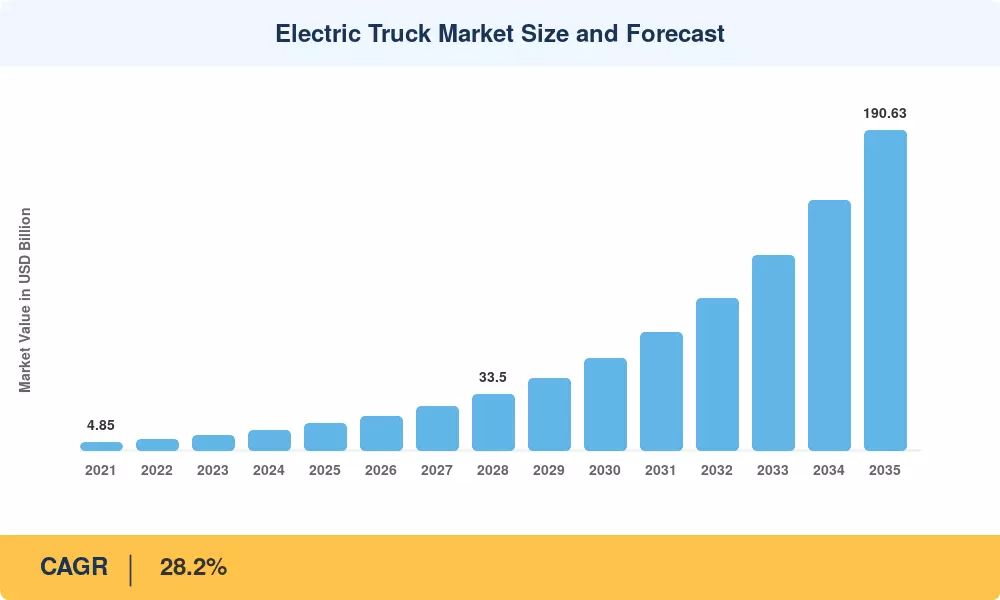
Electric Truck Market to Reach USD 190.63 Billion by 2035, Growing at 28.2% CAGR
Middle East & Africa region is expanding at a 33.1% CAGR, the fastest of any region, as sovereign wealth-backed
Press Release Disclaimer: This is a press release distributed through the XPR Media network. It has not been independently verified by our newsroom.

Middle East & Africa region is expanding at a 33.1% CAGR, the fastest of any region, as sovereign wealth-backed logistics hubs invest in fleet electrification
NEW YORK, NY, UNITED STATES, August 26, 2026 /EINPresswire.com/ — According to Market Research Future, the Electric Truck Market is projected to climb from USD 20.38 Billion in 2026 to USD 190.63 Billion by 2035, registering a CAGR of 28.2% across the forecast period. This extraordinary growth trajectory reflects the transformative shift occurring in the commercial vehicle sector, where electric trucks are emerging as a viable and increasingly preferred alternative to traditional diesel-powered vehicles. The market’s explosive expansion is driven by stringent emission regulations targeting commercial fleets, the accelerating total cost of ownership parity between electric and diesel trucks, significant technological advancements in battery technology and charging infrastructure, and growing corporate sustainability commitments from logistics companies and fleet operators worldwide.
Market Overview
Electric trucks represent a revolutionary advancement in commercial transportation, utilizing electric propulsion systems powered by rechargeable battery packs or fuel cells to deliver zero-emission freight movement. These vehicles encompass a diverse range of applications from light-duty delivery vans and pickup trucks to heavy-duty tractor-trailers and specialized utility vehicles. The electric truck market is experiencing unprecedented growth as technological advancements address historical barriers including range limitations, payload capacity concerns, and charging infrastructure availability, making electric trucks increasingly practical for a widening array of commercial applications.
The key growth drivers propelling this market forward include increasingly stringent emission regulations worldwide, with governments implementing aggressive timelines for phasing out internal combustion engine commercial vehicles in urban areas and along major transport corridors. The total cost of ownership for electric trucks is reaching parity with diesel trucks in many applications, driven by declining battery costs, reduced maintenance requirements, and lower energy costs per kilometer. Corporate sustainability commitments from major logistics companies, retailers, and fleet operators are accelerating electric truck adoption as companies seek to reduce their carbon footprints and meet environmental, social, and governance targets. Additionally, technological advancements in battery energy density, fast charging capabilities, and electric drivetrain efficiency are expanding the operational capabilities of electric trucks.
Technological developments are reshaping the electric truck landscape at an accelerating pace. Advancements in lithium-ion battery technology, including higher energy density and improved thermal management, are extending driving ranges and reducing vehicle weight. The development of high-power charging systems capable of delivering megawatt-level charging is making long-haul electric trucking increasingly practical. Battery electric vehicles dominate the market currently, with lithium-ion batteries being the most widely deployed energy storage technology, though fuel-cell electric vehicles are gaining traction for extreme long-haul applications where battery weight and charging time present challenges. The integration of artificial intelligence and predictive analytics into fleet management systems enables optimized routing, charging scheduling, and energy management, improving operational efficiency.
📍 Get Free Sample Report for Detailed Market Insights:
https://www.marketresearchfuture.com/sample_request/6261
Market Segmentation
The electric truck market is segmented based on propulsion type, truck type, application, and regional analysis to provide comprehensive insights into industry dynamics.
By Propulsion Type: The market is categorized into Battery Electric Vehicle, Fuel-Cell Electric Vehicle, and Plug-in Hybrid Electric Vehicle segments. Battery Electric Vehicles dominate the market, representing the most widely adopted technology for electric trucks across all weight classes. BEVs offer zero-emission operation, lower operating costs compared to diesel, and are well-suited for applications with predictable routes and depot-based charging. Fuel-Cell Electric Vehicles represent a growing segment, particularly for long-haul and heavy-duty applications where the combination of extended range, rapid refueling, and heavy payload capacity offers advantages over battery electric systems. FCEVs utilize hydrogen to generate electricity, producing only water vapor as a byproduct, making them particularly attractive for applications requiring maximum payload capacity and minimal downtime. Plug-in Hybrid Electric Vehicles serve a niche segment, combining internal combustion engines with electric propulsion to offer flexibility for applications where pure electric range may be insufficient and charging infrastructure is limited. The Electric Light Commercial Vehicle Market provides additional context on the light-duty segment, which represents the largest volume opportunity in the electric truck market.
By Truck Type: The market is segmented into Light-Duty (< 12 tonnes) and Tractor-Trailer categories. Light-Duty trucks constitute the largest segment currently, driven by the rapid electrification of delivery vans, pickup trucks, and other commercial vehicles used for last-mile logistics and urban services. The suitability of light-duty trucks for electric propulsion, with their predictable routes, return-to-base charging capability, and lower range requirements, makes them the most economically viable segment for early adoption. Tractor-Trailer trucks represent the fastest-growing segment, as technological advancements enable long-haul electric trucking. While currently a smaller segment due to range and charging infrastructure challenges, the tractor-trailer segment is witnessing rapid development with major manufacturers introducing long-haul electric trucks capable of 300-500 miles of range. The deployment of megawatt charging infrastructure along major transport corridors is unlocking the potential for long-haul electric trucking, positioning this segment for significant growth in the coming years.
By Application: The market is divided into Logistics & Parcel Delivery, Municipal Services, Construction & Mining, Retail Distribution, and Utility & Infrastructure segments. Logistics & Parcel Delivery dominates the market, driven by the explosive growth of e-commerce and the operational advantages of electric delivery vans for last-mile operations. These vehicles benefit from predictable routes, return-to-base charging, and significant fuel and maintenance cost savings compared to diesel alternatives. Municipal Services represent a substantial segment, including refuse collection, street sweeping, and maintenance vehicles where electric powertrains offer reduced noise and emissions in urban environments. Construction & Mining, while currently a smaller segment, presents substantial long-term potential as battery technology advances to meet the extreme power and durability requirements of heavy-duty off-road equipment. Retail Distribution includes electric trucks used for store replenishment and wholesale distribution, with major retailers committing to fleet electrification to meet sustainability targets. Utility & Infrastructure includes specialized vehicles used for utility maintenance, infrastructure inspection, and emergency services where electric powertrains offer operational advantages.
By Region: The market covers North America, Europe, South America, Asia Pacific, and the Middle East and Africa. Asia Pacific leads the global market, driven by massive commercial vehicle production, strong government support for electrification, and the presence of leading electric truck manufacturers in China. North America represents a rapidly growing market with significant investment in electric truck development by major manufacturers and increasing adoption by logistics companies. The Electric Truck and Heavy Duty Charging Market is closely linked to regional growth, as charging infrastructure availability is critical for electric truck adoption across all regions.
🛒 You can buy this market report at:
https://www.marketresearchfuture.com/checkout?currency=one_user-USD&report_id=6261
Regional Analysis
Asia Pacific dominates the global electric truck market, commanding the largest share driven by massive commercial vehicle production, strong government support for electrification, and the presence of leading electric truck manufacturers. China leads the regional market with the world’s largest commercial vehicle market and aggressive government policies promoting new energy vehicles across all segments. The Chinese government’s substantial subsidies and regulatory advantages for electric trucks are accelerating adoption, with battery electric trucks already deployed in significant numbers for urban delivery and municipal services in major cities. Japan and South Korea represent mature markets with leading automotive manufacturers investing heavily in electric truck development, including fuel cell technology for heavy-duty applications. India represents an emerging market with substantial growth potential, driven by increasing commercial vehicle production, government initiatives promoting electric mobility, and the need to reduce urban air pollution in major cities. The region’s rapidly expanding charging infrastructure, particularly for light and medium-duty trucks, is supporting continued market growth.
North America represents a rapidly growing market for electric trucks, characterized by significant investment in electric truck development by major manufacturers and increasing adoption by logistics companies. The United States leads the region with substantial federal and state-level incentives supporting commercial vehicle electrification. California’s Advanced Clean Trucks Regulation serves as a catalyst for electric truck adoption, requiring manufacturers to sell an increasing percentage of zero-emission trucks in the state. Major logistics companies including Amazon, FedEx, and UPS have committed to fleet electrification, creating substantial demand for electric delivery vans and trucks. The deployment of charging infrastructure along major freight corridors, including the West Coast Clean Transit Corridor initiative, is enabling long-haul electric trucking. Canada shows similar trends with federal and provincial incentives supporting commercial EV adoption, particularly in urban centers with air quality concerns. The North American market is witnessing strong competition among established manufacturers and emerging electric truck startups.
Europe represents a technologically sophisticated market with strong growth driven by stringent emission regulations, government incentives, and increasing corporate sustainability commitments. The European Union’s stringent CO2 emission standards for heavy-duty vehicles are driving automakers to expand electric truck offerings and accelerate technology development. Germany leads the European market with major automotive manufacturers investing heavily in electric truck development and production, supported by government funding for research and infrastructure. The UK, France, and the Nordic countries are witnessing strong adoption driven by early implementation of low-emission zones and generous purchase incentives. The European market is characterized by a diverse range of applications from urban delivery vans to long-haul tractor-trailers, with significant investment in charging infrastructure along major transport routes. The region’s commitment to reducing transportation emissions and achieving climate neutrality targets continues to drive electric truck adoption across all segments.
South America and the Middle East and Africa represent emerging markets with growth potential for electric trucks. South America, led by Brazil, is experiencing increasing interest in electric commercial vehicles driven by urban air quality concerns and the potential for lower operating costs. Brazil’s developing automotive manufacturing base and the availability of government incentives for electric vehicles support market development. The Middle East, while currently a smaller market, is showing interest in electric trucks driven by sustainability initiatives and fleet modernization programs, with the UAE and Saudi Arabia investing in electric vehicle infrastructure. South Africa represents the most developed market in Africa, with growing interest in electric trucks for mining and logistics applications.
Competitive Landscape and Key Players
The electric truck market is characterized by intense competition among established commercial vehicle manufacturers, automotive companies, and emerging electric truck startups. Key players are focusing on product development, strategic partnerships, and manufacturing capacity expansion to capture market share in the rapidly growing electric truck market.
Major companies operating in this space include Tesla Inc., BYD Company Limited, Daimler Truck Holding AG, Volvo Group, PACCAR Inc., Navistar International Corporation, Nikola Corporation, Rivian Automotive Inc., Workhorse Group Inc., Xos Inc., Einride AB, Foton Motor, Dongfeng Motor Corporation, Toyota Motor Corporation, Hyundai Motor Company, Scania AB, MAN SE, and Iveco Group N.V. These industry leaders invest significantly in research and development to create innovative electric truck solutions that meet diverse customer requirements and operational needs.
Latest Industry News and Developments
Recent industry developments highlight the dynamic evolution of the electric truck market and the intensifying competition among major players. A prominent electric truck manufacturer recently announced a significant expansion of its manufacturing capacity dedicated to commercial electric vehicles, with new production lines capable of producing tens of thousands of electric trucks annually to meet growing demand.
Another significant development involves a leading commercial vehicle manufacturer unveiling a new generation of electric heavy-duty trucks featuring advanced battery technology that delivers extended range and fast charging capability. The new models are designed specifically for long-haul applications, representing a major advancement in making electric trucking viable for cross-country freight transportation.
In the technology innovation space, a collaborative initiative between a major truck manufacturer and a charging infrastructure provider recently announced plans to deploy a network of megawatt charging stations along key freight corridors. The initiative aims to eliminate range anxiety and enable long-haul electric trucking by providing rapid charging capabilities for heavy-duty electric trucks.
In the regulatory and investment space, a government agency recently announced substantial funding for electric truck adoption and charging infrastructure deployment, including purchase incentives for fleet operators and grants for charging station installation at logistics hubs and rest stops.
Market Challenges and Opportunities
The electric truck market faces several significant challenges that require strategic solutions for sustainable growth. The higher upfront cost of electric trucks compared to diesel alternatives remains a primary barrier to adoption, though the total cost of ownership is reaching parity in many applications. Range limitations for heavy-duty and long-haul applications continue to be a concern, though technological advancements are progressively addressing this challenge. Charging infrastructure availability, particularly for heavy-duty trucks, remains insufficient in many regions, creating range anxiety and limiting operational flexibility. Charging time compared to refueling diesel trucks impacts operational efficiency, particularly for long-haul applications where downtime affects productivity.
Emerging opportunities in the market are substantial and growing. The total cost of ownership advantage for electric trucks in many applications is becoming increasingly evident, with lower energy and maintenance costs offsetting higher purchase prices. The logistics and parcel delivery sector offers the most immediate opportunity, with electric delivery vans providing significant operational advantages for last-mile operations. The municipal services segment offers opportunities for electric refuse trucks and maintenance vehicles that benefit from reduced noise and emissions in urban environments.
To explore more market insights, visit us at:
https://www.marketresearchfuture.com/reports/electric-truck-market-6261
Final Market Summary
Key factors expected to influence future development include the pace of battery technology advancement and cost reduction, expansion of high-power charging infrastructure, regulatory frameworks promoting commercial vehicle electrification, the evolution of fuel cell technology for extreme long-haul applications, and the changing competitive landscape shaped by both established manufacturers and emerging startups. The electric truck market, while facing challenges from infrastructure development and technology advancement, represents a fundamental component of the global energy transition and will play a central role in decarbonizing the commercial transportation sector, shaping the future of freight movement and logistics worldwide.
More Related Reports from MRFR Library:
Vehicle Trailer Hitch Market : https://www.marketresearchfuture.com/reports/vehicle-trailer-hitch-market-26674
EV Power Module Market : https://www.marketresearchfuture.com/reports/ev-power-module-market-26852
Electric Tuk Tuk Market : https://www.marketresearchfuture.com/reports/electric-tuk-tuk-market-26928
OTR Tire Market : https://www.marketresearchfuture.com/reports/otr-tire-market-27225
Automotive Coupling Market : https://www.marketresearchfuture.com/reports/automotive-coupling-market-27459
Automotive Passive Electronic Component Market : https://www.marketresearchfuture.com/reports/automotive-passive-electronic-component-market-27744
Automotive Fuel Level Sensor Market : https://www.marketresearchfuture.com/reports/automotive-fuel-level-sensor-market-27801
Tanzania Used Car Market : https://www.marketresearchfuture.com/reports/tanzania-used-car-market-27996
Passenger Car Accessories Market : https://www.marketresearchfuture.com/reports/passenger-car-accessories-market-28015
Minibus Market : https://www.marketresearchfuture.com/reports/minibus-market-28023
Market Research Future
Market Research Future
+1 855-661-4441
email us here
Legal Disclaimer:
EIN Presswire provides this news content “as is” without warranty of any kind. We do not accept any responsibility or liability
for the accuracy, content, images, videos, licenses, completeness, legality, or reliability of the information contained in this
article. If you have any complaints or copyright issues related to this article, kindly contact the author above.

Media gallery